Border Conflict Erupts Between Thailand and Cambodia: An Analysis of the Impact on Cambodia
Author: Anna Araki / Anna Advisors Co., Ltd.
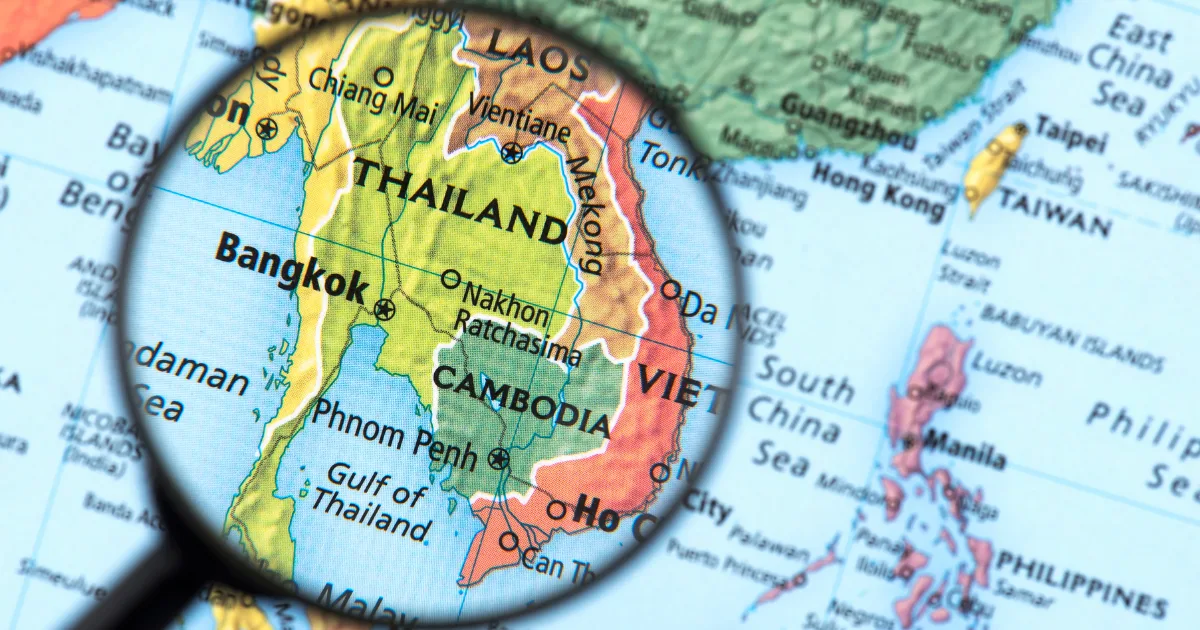
In late May 2025, shocking news was reported that an armed conflict had erupted near the border between Thailand and Cambodia.
In this article, we will explain the historical background behind the border dispute between Thailand and Cambodia, as well as the current situation. We will also review important precautions related to Cambodian real estate investment.
Table of Contents
- Military Clash Occurs Near the Border in Late May 2025
- History of the Thailand–Cambodia Border Dispute
- Origin of the Border Issue in the French Colonial Era
- Dispute Over Sovereignty Around the Preah Vihear Temple Area
- Military Clashes Around Preah Vihear in 2008
- Temporary Stabilization Following the International Court of Justice Ruling in 2013
- Renewed Tensions Following the Rise of a Thaksin-Aligned Government in Thailand
- Ongoing Bilateral Tensions
- Leaked Phone Call Causes Political Turmoil in Thailand
- Impact of the Border Conflict on Cambodia
- Approaching Border Areas in Cambodia Is Dangerous
- Foreign Ownership Restrictions When Purchasing Cambodian Real Estate
- High Risks of Purchasing Cambodian Property Through Individual Agents
- Safe Cambodian Real Estate Investment with Anna Advisors
- Safe Cambodian Real Estate Investment with Anna Advisors
Military Clash Occurs Near the Border in Late May 2025
In the early morning of May 28, 2025, a firefight broke out between Thai and Cambodian forces in the border area between Ubon Ratchathani Province in northeastern Thailand and Preah Vihear Province in northern Cambodia. The clash occurred near the Preah Vihear Temple located close to the border.
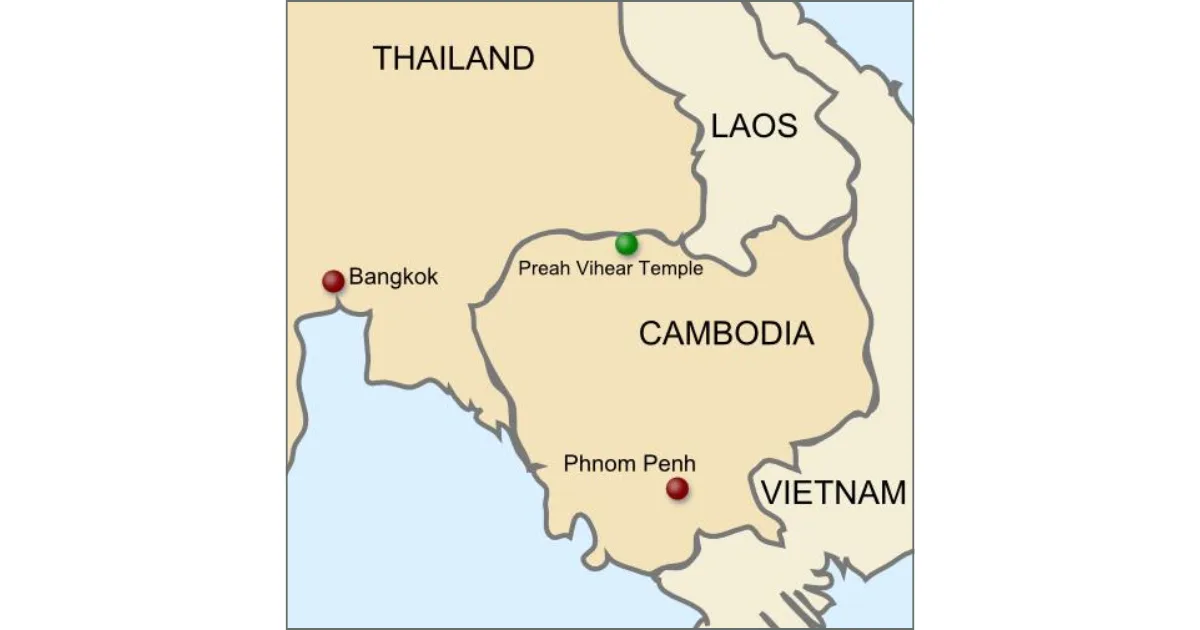
The fighting lasted approximately ten minutes before a ceasefire was declared by commanders on both sides, preventing escalation into a large-scale conflict. However, one Cambodian soldier was killed in the exchange.
The area where the incident occurred is a disputed border region, and the two militaries presented the following claims:
- Thai Military: Armed Cambodian soldiers crossed into Thai territory, prompting patrol engagement. Fire was returned after being fired upon.
- Cambodian Military: The area in question has long been Cambodian territory, and Thai forces fired first.
The military clash heightened concerns over bilateral tensions and was widely reported in international media.
History of the Thailand–Cambodia Border Dispute
The latest incident is not the first border conflict between Thailand and Cambodia. The issue dates back to the 19th century during the French colonial era and remains a deeply rooted problem. This longstanding tension is one of the reasons often cited for strained relations between the two countries.
Origin of the Border Issue in the French Colonial Era
The Thailand–Cambodia border dispute originated in the 19th century when Cambodia was under French colonial rule. In 1863, Cambodia became a French protectorate, and later, the northern regions of Cambodia—previously under Siamese (Thai) control—were ceded to France.
In 1907, France defined the border along the watershed of the Dângrêk Mountains, a region that includes Angkor Wat. The Preah Vihear Temple, whose sovereignty had been ambiguous, was also designated as Cambodian territory, leaving long-term territorial resentment between the two nations.
Dispute Over Sovereignty Around the Preah Vihear Temple Area
In the 1930s, Thailand claimed that Thai surveys showed the watershed and border lines did not match. After World War II, Thai forces deployed around the Preah Vihear Temple and effectively controlled the area.
Cambodia brought the territorial dispute to the International Court of Justice, which ruled in 1962 that the area belonged to Cambodia. Although Thailand was dissatisfied with the decision, the ruling temporarily settled the issue.
Military Clashes Around Preah Vihear in 2008
In 2008, Cambodia successfully registered the Preah Vihear Temple as a UNESCO World Heritage Site. This action provoked strong opposition from Thailand, sharply escalating tensions. In October 2008, a firefight erupted between Thai and Cambodian troops near the temple.
In late 2009, Thai activists were arrested for illegally entering Cambodian territory. In 2011, another military clash occurred, resulting in multiple casualties.
Temporary Stabilization Following the International Court of Justice Ruling in 2013
With tensions escalating, the International Court of Justice intervened. In July 2011, both militaries were ordered to withdraw immediately, and full withdrawal was completed by July 2012.
In 2013, the ICJ again ruled that the Preah Vihear Temple area belonged to Cambodia, bringing temporary stabilization. However, minor skirmishes have reportedly continued since.
Renewed Tensions Following the Rise of a Thaksin-Aligned Government in Thailand
After a period of diplomatic cooperation, tensions resurfaced when a Thaksin-aligned government took power in Thailand in 2023. Thaksin Shinawatra’s populist policies gained public support but also provoked military backlash.
In 2024, the Thaksin-aligned government advanced a joint resource development project with Cambodia. Critics alleged that Cambodian maps were used in undemarcated border areas, potentially compromising Thai territory. Former Prime Minister Thaksin’s daughter, Prime Minister Paetongtarn, and Cambodia became targets of fierce criticism.
These developments hardened Cambodia’s stance and heightened border tensions. In February 2025, border patrols and civilian groups from both countries exchanged heated verbal confrontations.


Ongoing Bilateral Tensions
Following the late-May military clash, border talks were held but failed to reach a fundamental resolution. On June 15, Prime Minister Hun Manet posted on social media that an official letter on the border dispute had been submitted to the International Court of Justice. Thailand expressed regret over the post while reaffirming its commitment to continued negotiations.
Both countries implemented the following countermeasures:
| Thailand | Cambodia |
|---|---|
| ・Partial relocation of border checkpoints ・Strengthened import controls on Cambodian cassava (June 21) ・Full closure of border checkpoints (June 23) | ・Ban on Thai film imports ・Closure of 일부 border checkpoints (June 19) ・Ban on oil and gas imports from Thailand (June 22) |
Retaliatory measures continue, deepening bilateral tensions.
Leaked Phone Call Causes Political Turmoil in Thailand
Following the clash, Prime Minister Paetongtarn Shinawatra of Thailand and Prime Minister Hun Manet of Cambodia held a private phone conversation. The two leaders are known to have close family ties.
During the call, Prime Minister Paetongtarn allegedly made disparaging remarks about the Thai military and referred to Hun Manet affectionately as “uncle,” appearing to support Cambodia. The leaked recording triggered public outrage in Thailand.
On June 18, the Bhumjaithai Party, the second-largest ruling coalition party, withdrew from the government. While the administration still technically holds a parliamentary majority, further withdrawals could lead to its collapse. Although Prime Minister Paetongtarn intends to remain in office, the possibility of a no-confidence motion has created severe political instability.
Impact of the Border Conflict on Cambodia
The conflict has significantly impacted Cambodia, particularly in the following sectors:
- Agriculture: Export delays of cassava and other key agricultural products
- Tourism: Sharp decline in land-based tourists from Thailand due to border closures
- Migrant Workers: Return of Cambodian migrant workers from Thailand, creating employment and reintegration concerns
If the Southern Economic Corridor’s logistics function is disrupted long-term, Cambodia’s economy could suffer severe consequences, potentially impacting real estate as well. There are also concerns that economic stagnation could spread throughout the ASEAN region.
Approaching Border Areas in Cambodia Is Dangerous
Regardless of this incident, approaching border areas in Cambodia without a specific purpose is not recommended. Some border areas remain poorly demarcated, and approaching them may result in serious legal or political trouble.
Some disputed territories involve religious sites, making the disputes highly sensitive. If detained for territorial infringement, treatment may become severe due to political considerations. Additionally, unexploded landmines from past civil conflicts remain in some border areas, posing physical dangers.


Foreign Ownership Restrictions When Purchasing Cambodian Real Estate
Foreigners are prohibited from purchasing property within 30 kilometers of Cambodia’s borders. Additional restrictions include:
- Foreigners may only purchase property on the second floor or higher
- Foreign ownership is limited to 70% of a building’s total floor area
- Only properties built after 2010 are eligible for foreign purchase
Careful confirmation of regulatory compliance is essential before purchasing.
High Risks of Purchasing Property Through Individual Agents
While it is possible to purchase property through individual agents, the risks are significant. Many agents prioritize short-term commissions, often neglecting post-purchase support. Some may even broker low-profit or legally noncompliant properties.
Property management standards in Cambodia are often inconsistent. Tenants’ rent delinquency and poor building maintenance are common. Individual agents may offer no after-sales support, forcing buyers to resolve disputes alone.
We have encountered numerous cases where clients who purchased through individual agents later failed to resolve their issues due to the lack of after-sales support.
Safe Cambodian Real Estate Investment with Anna Advisors
With over a decade of experience, we have brokered numerous property transactions in Cambodia. Our mission is to support our clients’ long-term asset formation. We provide post-purchase income simulations and tailored consulting services.
We emphasize property management, maintenance, and proactive issue handling. With offices in Phnom Penh, we maintain real-time insights into local market and political conditions.
Summary
Undemarcated border areas between Thailand and Cambodia have long caused territorial disputes. The military clash in May 2025 remains unresolved, resulting in ongoing restrictions on border movement and trade.
A prolonged conflict could negatively affect Cambodia’s economy and potentially impact real estate prices. Those considering property investment or business operations in Cambodia should closely monitor developments.
Our company brokers Cambodian real estate and operates a Phnom Penh office to stay fully informed of local conditions. If you have concerns regarding Cambodian real estate, please feel free to contact us.