
Cambodian Real Estate Investment: Can You Really Earn Over 10%?Key Risks and Practical Tips for Success
Author: Anna Araki / Anna Advisors Inc.

In recent years, more and more investors have turned their attention to Cambodia’s real estate market.
At the same time, many still wonder:
- “Is the market really stable?”
- “What kind of returns can I realistically expect?”
- “How risky are the politics and legal system?”
Another concern is where to find reliable information about this still-emerging market.
This article walks you through:
- The actual yields you can expect in Cambodian real estate
- The main risks you should be aware of
- Concrete tips to invest wisely and safely
Use this as a guide to build a clearer picture of the market and make more informed decisions.
Table of Contents
- What Is the Typical Yield in Cambodian Real Estate?
- Where Are Cambodian Property Prices Heading?
- Key Risks in Cambodian Real Estate Investment
- How to Improve Your Chances of Success
- For Deeper Learning: Join a Seminar
- Summary
What Is the Yield on Cambodian Real Estate Investment?
Cambodia’s real estate market attracts a great deal of attention from investors because of its high yields.
In particular, rental yields of 7%–10% are extremely attractive even compared with other countries.
However, there are various factors behind such high yields.
Understanding these factors and investing appropriately will be the key to success.
In this section, we will explain in detail the rental yield, long-term interest rates at local banks, and the potential for capital gains through inflation.
Please use this information as a reference when considering investment in the Cambodian real estate market.
(1) Rental Yields of 7%–10%
Cambodia’s real estate market is known for the high yields obtainable from rental income.
Especially in major cities such as Phnom Penh and Sihanoukville, rental yields can reach an average of 7% to 10%.
These yields are at a very high level compared with many other countries’ markets.
For example, some data suggest that luxury condominiums in the central area of Phnom Penh can generate an average rental yield of around 8.5%.
Such high yields are a major attraction for investors seeking stable income.
In addition, as Cambodia’s economic growth and urbanization progress, the real estate market is expected to continue expanding in the future.
Transactions in Cambodia’s real estate market are mainly denominated in USD, which offers the advantage of reducing foreign-exchange risk.
Furthermore, the increase in wealthy Cambodians and foreign residents is raising the stability of rental income.
Because of these factors, Cambodian real estate investment is a compelling option for investors seeking high yields.
(2) Long-Term Interest Rates at Local Banks Average Around 5%
Long-term interest rates at Cambodian banks are also an important factor when making investment decisions.
At local banks, long-term interest rates average around 5%, which is a competitive level compared with other investment vehicles.
For example, some banks offer an interest rate of 7.0% on time deposits with a term of three years or more.
These interest rates are particularly attractive for investors seeking stable returns while keeping risk under control.
Moreover, because Cambodia’s economy continues to grow steadily, bank interest rates also remain relatively stable.
Investors can use these interest rates to plan their financing and build an investment portfolio while diversifying risk.
Opening a bank account in Cambodia is relatively easy, and the environment is well prepared even for foreign investors to access.
Cambodian banks are also highly regarded within the ASEAN region, and investors can expect to invest within a stable financial environment.
Reference: ACLEDA Bank

(3) Capital Gains from Inflation
At a time when inflation in Japan is accelerating, investment in Cambodia’s real estate market is a particularly noteworthy option.
The reason is that Cambodia’s economy is supported by a high GDP growth rate.
Considering the risk of volatility in Japan’s domestic real estate market due to inflation, Cambodian real estate investment is attractive from the perspective of risk diversification.
Cambodia’s economy continues to grow, and demand for rental properties is increasing as the population grows.
As a result, risks of falling rents and vacancy risk can be kept low, and stable income can be expected.
In addition, some banks in Cambodia maintain a high annual interest rate of 7.0% for three-year time deposits, which also helps increase the potential for capital gains.
Since inflation is advancing in Japan, investment in Cambodia also brings a diversification effect to your asset portfolio.
Taking all these points together, Cambodian real estate investment can be regarded as a highly promising option.
Cambodia’s real estate market has established its position as an emerging market in Southeast Asia, and further development is expected in line with growth across the ASEAN region.
Reference: ACLEDA Bank

What Will Happen to Cambodian Real Estate Prices?
Cambodia’s real estate market is expanding along with economic growth, and property prices are on an upward trend, especially in major cities such as Phnom Penh and Sihanoukville.
In the past, there have even been cases where property prices in specific areas doubled within just a few years.
Such historical data serve as important reference points when investing with an eye on future price appreciation.
Investors can formulate sound investment plans based on these market trends.
Considering the potential of the market, Cambodian real estate is expected to continue increasing in value.
Furthermore, Cambodia’s real estate market benefits from the country’s high economic growth rate within Southeast Asia and from the fact that transactions are primarily conducted in US dollars, which helps reduce foreign-exchange risk.
As Cambodia consolidates its position as an emerging economy, further increases in real estate prices are expected in line with growth across the ASEAN region.
In particular, in major cities such as Phnom Penh and Sihanoukville, demand for high-end properties is rising as the number of wealthy individuals and foreign residents increases.
Due to these factors, it can be said that Cambodia’s real estate market has a high potential for further price appreciation.
In addition, the supply of high-quality new properties by major developers is increasing in Cambodia’s real estate market, contributing to greater market activity.
The ease of opening bank accounts and managing assets within Cambodia is also an attractive point for foreign investors.
Taking all of these factors together, Cambodia’s real estate market can be considered an attractive option for investors even from a long-term perspective.
It will be important to keep a close eye on future market trends and choose the right timing for property purchases.

Risks of Investing in Cambodian Real Estate
Real estate investment in Cambodia offers great opportunities, but the risks that come with it cannot be ignored.
- Foreigners are limited to purchasing condominium units and similar properties, not land
- Widespread use of the pre-build (off-plan) system
- An underdeveloped property registration system
- Differences in floor-area notation
- Shortage of truly trustworthy real estate companies
- Country risk specific to Cambodia itself
These and other issues are likely major concerns for investors.
Here, we will explain these risks in Cambodian real estate investment in more concrete terms and provide approaches to help investors cope with the problems they may face.
(1) Foreigners Can Only Purchase Condominium Units and Similar Properties
In Cambodia, there are restrictions when foreigners purchase real estate; specifically, foreigners are only allowed to purchase condominium units.
They cannot purchase land or detached houses.
Therefore, condominiums essentially become the main investment target.
The condominium market is active, and especially in urban areas such as the capital Phnom Penh and Sihanoukville, many new development projects can be seen.
For foreign investors, condominiums in these areas are attractive investment destinations.
However, when considering a purchase, it is important to carefully evaluate factors such as the quality of the building, the management conditions, and location.
In Cambodia’s real estate market, transactions for condominium purchases by foreigners are typically conducted in US dollars.
This helps reduce foreign-exchange risk and is a favorable condition for foreigners investing in the Southeast Asia region.
Moreover, due to Cambodia’s high economic growth rate and the development of the ASEAN region, property price appreciation is expected.
That said, because foreigners are not allowed to own land, condominium investments come with their own specific advantages and disadvantages.
Investors should take these points into account and consider condominium investment as one component of their overall asset-management strategy.
(2) Risk of Construction Being Halted Under the Pre-Build System
In Cambodia’s real estate market, the pre-build (off-plan) system is common, but this system carries the risk that construction may be halted partway through.
Investors must take this risk into consideration and select reliable developers.
For that reason, it is essential to check the project’s progress status and the developer’s past track record.
In addition, when signing a contract, investors are advised to review clauses related to potential construction stoppage and to take steps to minimize such risks.
If construction is halted midway, it can lead to significant losses for investors, so careful deliberation is required.
When the risks of the pre-build system are taken into account, Cambodian real estate investment offers attractive conditions such as high interest and yield guarantees, but at the same time, investors may face problems such as construction being stopped or the developer going bankrupt.
Investors must understand these risks and conduct sufficient due diligence and risk assessment before purchasing.
Choosing a reliable developer and regularly checking construction progress are important steps in mitigating risk.
(3) The Registration System Is Still Not Fully Developed
Cambodia’s property registration system is still not fully developed.
As a result, issues related to ownership rights may arise.
For investors, confirming the transparency and reliability of registration procedures is essential.
Verifying ownership is one of the most important elements in real estate transactions.
Unclear registration status can increase the risk of future disputes or challenges in asserting one’s rights.
Therefore, investors should thoroughly investigate the registration status of any property they are considering purchasing and seek legal advice when necessary.
In Cambodia’s real estate market, shortcomings in the registration system represent a major risk factor for investors.
Foreign investors in particular are not familiar with local laws and systems, so they need to pay special attention to the transparency of registration procedures and confirmation of ownership rights.
By obtaining support from trustworthy real estate companies and legal advisors, it is possible to reduce these risks and carry out real estate investment safely.
Understanding the characteristics of Cambodia’s real estate market and implementing appropriate risk management are key to success.

(4) There Are Two Methods of Floor-Area Notation
In Cambodia, there are two methods used to indicate the floor area of a property.
Because of this, discrepancies can occur between the actual floor area and the area as stated.
For investors, accurate floor area is extremely important.
In some cases, area notation may use square meters or local units, which can be confusing, especially for international investors.
Therefore, when purchasing a property, it is advisable to confirm both the method used to measure floor area and the actual area, and to carefully check whether there are any discrepancies with the advertised figure.
In Cambodia’s real estate market, differences in floor-area notation are one of the common issues that investors face.
In particular, differences between international standards and local standards can affect the valuation of a property and its rental income.
Investors should understand these differences in area notation and consult experts so they can accurately evaluate the property’s true value.
To avoid misunderstandings arising from different area notations, it is essential to confirm both the measurement method and the actual floor area before purchasing a property.
(5) Few Truly Trustworthy Real Estate Companies
In Cambodia’s real estate market, there are still not many trustworthy real estate companies.
Prudent investors should choose real estate companies that have a solid track record and credibility.
Because the market is still immature, there are only a limited number of companies that possess the professional knowledge and experience necessary for real estate transactions.
Investors must carefully evaluate factors such as the company’s past performance, reputation among clients, and the quality of the services provided.
It is also important to select a company that can communicate smoothly, taking into account language barriers and cultural differences.
In Cambodia’s real estate market, choosing a trustworthy real estate company is key to successful investment.
Particularly in situations where market transparency is low, choosing a company with a proven track record becomes even more important.
When selecting a real estate company, investors should carefully evaluate its credibility, expertise, and quality of customer service, and choose an appropriate partner.
By understanding the characteristics of Cambodia’s real estate market and implementing appropriate risk management, investors can achieve safe and effective real estate investments.
(6) Country Risk Unique to Cambodia
Cambodia has not yet achieved complete political and economic stability.
For this reason, it is necessary to take country risk into account when investing.
Political changes and shifts in economic policy can have a direct impact on the real estate market.
Investors should constantly monitor Cambodia’s political and economic situation and properly assess the risk.
In addition, other risk factors that international investors may face—such as currency risk and changes in laws—must also be considered.
Understanding these risks and establishing appropriate risk-management strategies are keys to success.
Country risk in Cambodia is an important element that investors must take into consideration.
Political instability and changes in economic policy can have a significant impact on the real estate market, and investors need to properly assess these risks and develop risk-management strategies.
At the same time, Cambodia’s real estate market is developing alongside economic growth in the ASEAN region, and investors should also take this growth potential into account.
Understanding these risks and establishing appropriate risk-management strategies are keys to success.

Tips for Successful Cambodian Real Estate Investment
Real estate investment in Cambodia has the potential to produce significant success if you have the right knowledge and strategy.
However, many investors face the challenge of how to minimize risk while achieving high returns.
Here, we present concrete approaches—the “tips” for success in Cambodia’s real estate market.
- Selecting the right investment area
- Choosing a trustworthy real estate company
- The importance of on-site inspections
- Capturing the latest information
- Formulating an exit strategy
By understanding and leveraging these elements, you can increase your chances of success in the Cambodian real estate market.
For those who wish to gain even deeper knowledge, participation in specialized seminars is also recommended.
These seminars provide detailed information necessary for investment, such as the latest market trends and tax changes, and are excellent opportunities for investors to deepen their knowledge.
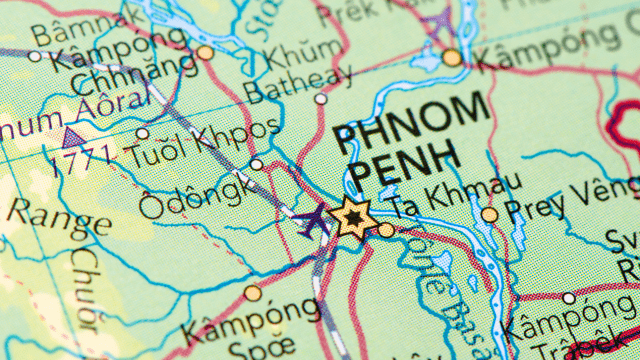
(1) Limit Your Investment Area to Phnom Penh
Cambodia—especially its capital Phnom Penh—can be described as a kind of “meridian” of investment within Southeast Asia.
It is the country’s economic center, and the real estate market is also very active.
By limiting your investment area to Phnom Penh, you can expect high income gains.
Phnom Penh is the political and economic hub of the country, and demand from international companies and foreign expatriates is increasing.
Property prices in this city have risen significantly since 2020, and areas such as the city center and riverfront are especially recommended regions that offer the promise of high yields.
New infrastructure projects and commercial developments are also underway, further boosting property values.
Investors should carefully observe these trends and select suitable properties.
(2) Choose a Real Estate Company with a Track Record and Strong After-Sales Support
Choosing a trustworthy real estate company is nothing less than the key to successful real estate investment in Cambodia.
By selecting a company that has a proven track record and provides robust after-sales support, you can invest with confidence.
A company with extensive experience will be well versed in market trends and changes in the law, and will be able to provide valuable advice to investors.
Strong after-sales support also offers peace of mind when it comes to post-purchase management and response in the event of problems.
In overseas real estate investment, differences in language and culture can be major barriers.
Having a reliable partner is therefore extremely important.
Investors should check the company’s reputation and past transaction history and choose one that aligns with their own investment objectives.
(3) Join On-Site Inspections
It is extremely important to actually visit the country and inspect the properties directly.
By participating in on-site inspections, you can gain a real understanding of the investment destination and make more appropriate decisions.
During an on-site inspection, you can directly check the property’s location, surrounding environment, and building quality.
Through conversations with local residents and real estate agents, you can also gain a deeper understanding of the real market situation and regional characteristics.
This kind of information is precious and cannot be obtained from photos or documents alone.
Investors are encouraged to base their investment decisions on the information obtained through such on-site inspections, thereby achieving higher accuracy in their judgments.
(4) Create an Environment Where You Can Always Capture the Latest Information
Cambodia’s real estate market is constantly changing.
By continuously capturing the latest market information, you can invest at the right timing.
Factors that affect real estate investment are diverse, including market trends, policy changes, and new development projects.
To obtain this information quickly, it is important to secure reliable information sources and conduct market analysis on a regular basis.
Building networks with local real estate agents and investor communities is also an effective way to obtain the latest information.
Investors are expected to leverage this information and respond quickly to changes in the market.
(5) Establish an Exit Strategy in Advance
In investing, the importance of an exit strategy should not be forgotten.
It is crucial to clarify the purpose and time horizon of the investment and to plan the timing of the sale appropriately.
An exit strategy is indispensable for maximizing investment returns and managing risk.
Investors need to determine the optimal timing for selling by considering factors such as market trends, changes in the property’s value, and their own financial situation.
It is also important to take into account taxes, fees, and other costs involved in the sale process.
Having a well-planned exit strategy enables investors to respond flexibly even in unforeseen circumstances and to secure stable returns.
For Those Who Want to Learn More: Attend a Seminar
For those seeking more detailed information on Cambodian real estate investment or specific advice, participation in specialized seminars is recommended.
At these seminars, experts provide in-depth explanations and may also offer opportunities for individual consultation, so please consider attending.
These seminars cover a wide range of topics, including the latest market trends, investment methods, and tax changes.
You can also hear first-hand from investors and professionals who have actually succeeded in Cambodia, making it a valuable learning opportunity.
By attending seminars, investors can deepen their knowledge and formulate more effective investment strategies.
Additionally, networking with other investors can provide new information and business opportunities.
Summary
Cambodian real estate investment offers high yields and significant growth potential, but it also involves risks.
To succeed in investment, it is important to:
- Understand the market
- Choose appropriate areas and real estate companies
- Conduct on-site inspections
- Keep up with the latest information
- Plan your exit strategy
By focusing on these points, you can increase your chances of success in the Cambodian real estate market.
If you are interested, why not consider attending a seminar to gain further information?