How Much Does It Cost to Live in Cambodia Per Month?Simulating Typical Budgets by Household Type
Author: Anna Araki / Anna Advisors Inc.

Cambodia’s economic growth in recent years has been remarkable.
The number of foreign companies expanding into the country has been growing, and Cambodia is also gaining popularity as a destination for relocation.
If you are considering moving to Cambodia, you are probably wondering about the local price levels and monthly cost of living.
In this article, we will take a detailed look at the approximate monthly cost of living in Cambodia.
Of course, living expenses vary depending on individual lifestyle, but having a rough benchmark will make it much easier to picture what day-to-day life is like on the ground.
We will also explain key points to keep in mind when living in Cambodia, so please read on to the end.
https://youtube.com/watch?v=Dqe9kvPvTbM%3Ffeature%3Doembed%26enablejsapi%3D1%26origin%3Dhttps%3A
Table of Contents
- Check Typical Living Costs in Cambodia by Expense Category
- Comparing Living Costs in Cambodia and Japan
- Food Expenses | Most food items are cheaper than in Japan
- Eating Out | Around USD 10–50 per person at a typical restaurant
- Lifestyle Goods & Habits | Alcohol and cigarettes are cheaper than in Japan
- Rent | Average rents are around half of Japan’s levels
- Transportation | Around USD 50–100 using tuk-tuks and motorbikes
- Utilities | Electricity is notably expensive even compared with other Southeast Asian countries
- Communications | Mobile phone charges around USD 10–20 per person per month
- Education | International school fees are relatively high
- Stay-related Costs | Each person needs to budget for a visa to live in Cambodia
- Simulating Monthly Living Costs in Cambodia by Household Type
- Is “The Cost of Living in Cambodia Is One-Tenth of Japan’s” a Myth?
- Three Expense Categories That Are Easier to Save On in Cambodia
- Five Things to Watch Out For When Living in Cambodia
- Healthcare | Medical treatment is generally fully out-of-pocket
- Healthcare | Medical treatment is generally fully out-of-pocket
- Insects | Cambodia has many species of insects, and they tend to be large
- Electrical Appliances | Most Japanese appliances cannot be used directly
- Security | Petty crimes targeting Japanese residents are relatively common
- Using Blogs and Other Grassroots Sources to Learn About Local Conditions
- Leave Your Move to Cambodia to Anna Advisors
- Summary
Check Typical Living Costs in Cambodia by Expense Category
Let’s start by looking at typical living costs in Cambodia.
We will first outline average monthly spending overall, then break down each major expense category.
For currency conversions in this article, we assume an exchange rate of USD 1 = JPY 150.
Comparing Living Costs in Cambodia and Japan
The table below compares average prices in Phnom Penh, Cambodia with those in Tokyo.
| Item | Average Price (JPY equivalent) – Phnom Penh | Average Price – Tokyo | Ratio vs. Tokyo |
|---|---|---|---|
| Meal at inexpensive restaurant | 774 yen | 1,000 yen | 77% |
| Meal for 2–3 people at mid-range restaurant | 4,643 yen | 7,000 yen | 66% |
| McDonald’s Value Meal | 1,083 yen | 800 yen | 135% |
| Domestic draft beer (500ml) | 155 yen | 500 yen | 31% |
| Cappuccino (regular) | 452 yen | 490 yen | 92% |
| Coca-Cola (330ml bottle) | 150 yen | 173 yen | 87% |
| Bottled water (330ml) | 141 yen | 115 yen | 122% |
| Bottle of wine | 1,857 yen | 1,100 yen | 169% |
| Cigarettes (pack of Marlboro, 20) | 271 yen | 600 yen | 45% |
| Milk (1 litre) | 334 yen | 233 yen | 143% |
| Bread (500g loaf) | 306 yen | 267 yen | 115% |
| White rice (1kg) | 153 yen | 494 yen | 31% |
| Chicken breast/fillet (1kg) | 678 yen | 1,079 yen | 63% |
| Beef round (1kg) | 1,594 yen | 3,072 yen | 52% |
| Apples (1kg) | 692 yen | 813 yen | 85% |
| Bananas (1kg) | 300 yen | 383 yen | 78% |
| Tomatoes (1kg) | 231 yen | 731 yen | 32% |
| Potatoes (1kg) | 243 yen | 424 yen | 57% |
| Lettuce (1 head) | 280 yen | 209 yen | 134% |
| One-way ticket (local transport) | 155 yen | 200 yen | 77% |
| Taxi 1km (standard fare) | 155 yen | 420 yen | 37% |
| Gasoline (1 litre) | 183 yen | 173 yen | 106% |
| Utilities (85㎡ apartment, incl. garbage) | 16,986 yen | 27,429 yen | 62% |
| Mobile phone plan (includes calls + 10GB data) | 916 yen | 3,822 yen | 24% |
| Internet (60Mbps or more, unlimited data) | 4,767 yen | 4,853 yen | 98% |
| Fitness club (adult monthly membership) | 7,643 yen | 9,043 yen | 85% |
| Pair of jeans (Levi’s 501 etc.) | 3,715 yen | 7,692 yen | 48% |
| Summer dress (e.g. ZARA) | 3,515 yen | 5,355 yen | 66% |
| Men’s business shoes | 9,199 yen | 11,890 yen | 77% |
| Kindergarten (full day, one child) | 55,205 yen | 75,650 yen | 73% |
| International primary school (annual, one child) | 2,107,040 yen | 2,267,353 yen | 93% |
| City-centre apartment (1-bedroom) monthly rent | 77,063 yen | 149,682 yen | 51% |
| Price per ㎡ to buy city-centre apartment | 353,827 yen | 1,236,979 yen | 29% |
| Mortgage interest rate (20-year fixed) | 11.0% p.a. | 1.69% p.a. | 651% |
Source: NUMBEO “Cost of Living in Cambodia 2024”
As you can see, prices in Phnom Penh are lower than in Tokyo for the vast majority of items.
If you maintain a similar standard of living to what you are used to in Japan, there is a good chance you can reduce your overall living expenses in Cambodia.
Another point to note is that US dollars are widely used across most of Cambodia, and USD is commonly used for everyday shopping.
Food Expenses | Most food items are cheaper than in Japan
As the table above shows, most food items can be purchased more cheaply in Phnom Penh than in Japan.
Day-to-day groceries and household items are typically bought at supermarkets.
You can also shop at local markets, but temperature control is often lacking, and there may be concerns about freshness and hygiene, so caution is advised.
Japanese products are also available at large shopping malls such as AEON. However, they are generally more expensive than in Japan due to import costs.
Eating Out | Around USD 10–50 per person at a typical restaurant
Food spending varies greatly depending on individual lifestyle and preferences.
If you rely mainly on eating out, your food costs will naturally be higher than if you cook at home.
In Phnom Penh, a typical mid-range restaurant charges around USD 10 for lunch and USD 30–50 for dinner per person.
Street food stalls and local eateries serving primarily Cambodian residents are significantly cheaper—just a few dollars per meal—but hygiene standards may not be as rigorous as in Japan.
When using such places, it is a good idea to pay close attention to the overall cleanliness of the shop.
Lifestyle Goods & Habits | Alcohol and cigarettes are cheaper than in Japan
In Cambodia, lifestyle items such as alcohol and cigarettes can be purchased for less than half their prices in Japan.
Since overall tax levels are lower than in Japan, excise taxes on alcohol and tobacco are also relatively low, which is reflected in the retail prices.
For those who regularly drink or smoke, this can significantly reduce monthly costs.
For example, if someone drinks one can of locally produced beer per day and smokes 20 packs of cigarettes per month, a rough cost estimate would be:
- Domestic canned beer (330ml):
USD 0.60 × 30 cans = USD 18 (approx. JPY 2,700) - Cigarettes (20 packs):
USD 1 × 20 packs = USD 20 (approx. JPY 3,000)
Total: USD 38 (approx. JPY 5,700)
Cambodia also offers a wide range of spirits such as shochu-type liquors, so those who enjoy drinking will likely find plenty to appreciate.
Rent | Average rents are around half of Japan’s levels
Property prices in Cambodia are generally lower than in Japan, and rental rates are often less than half of typical Japanese levels.
As a rough comparison of monthly rents for two-bedroom apartments in Phnom Penh and Tokyo:
- Phnom Penh: USD 450–2,500 (JPY 67,500–375,000)
- Shinjuku (Tokyo): JPY 130,000–1,530,000
Rent is a fixed monthly cost, so lower housing costs can make it much easier to enjoy a comfortable lifestyle.
On the other hand, mortgage interest rates in Cambodia are extremely high compared with Japan, so in most cases taking out a local mortgage is not advisable.
Transportation | Around USD 50–100 using tuk-tuks and motorbikes
In Cambodia, motorbikes and electric three-wheelers (tuk-tuks) are more commonly used than four-wheel passenger cars.
Tuk-tuks are popular with tourists and are a familiar sight in cities like Siem Reap, which is home to Angkor Wat.
Because motorbikes and tuk-tuks are cheaper to buy than cars and more manoeuvrable in traffic, they have become the dominant mode of transport.
Blogs by Japanese expats living in Cambodia frequently mention using motorbikes or tuk-tuks as primary transportation.
As of April 2025, gasoline in Cambodia costs around USD 1.17 per litre (approx. JPY 176 at USD 1 = JPY 150).
Depending on how frequently you drive, a rough monthly budget for vehicle maintenance plus fuel would be around USD 50–100.
Utilities | Electricity is notably expensive even compared with other Southeast Asian countries
One major downside to living in Cambodia is the high cost of electricity.
Because Cambodia cannot generate enough electricity domestically to meet its needs, it imports a significant portion from neighbouring countries. The associated import costs push up retail electricity prices.
According to a JICA survey, the household electricity tariff in Cambodia was around USD 0.20 per kWh (approx. JPY 30) as of 2022, which is noticeably higher than in nearby countries.
This is roughly on par with typical Japanese rates. Using average household electricity consumption in Japan, we can estimate monthly charges as follows
| Household Size | Electricity Bill – Shoulder Season (May) | Electricity Bill – Summer (August) | Electricity Bill – Winter (January) |
|---|---|---|---|
| Single person | 3,911 yen | 5,850 yen | 7,187 yen |
| Two-person household | 6,153 yen | 9,274 yen | 11,939 yen |
| Three-person household | 7,500 yen | 11,643 yen | 14,929 yen |
| Four-person household or more | 8,561 yen | 13,020 yen | 16,431 yen |
※Calculated assuming JPY 30 per kWh
Source: Tokyo Metropolitan Government, Climate Change and Energy Department, “Household Energy-Saving Handbook”
These are only rough benchmarks, and actual bills will vary with lifestyle and usage patterns.
However, it is reasonable to expect electricity charges in Cambodia to be roughly similar to those in Japan.
Water charges are often included in the rent and are generally inexpensive, typically under USD 10 per month.
Gas charges are minimal in all-electric homes, but even with gas usage, around USD 5 per month is a common benchmark.
Communications | Mobile phone charges around USD 10–20 per person per month
Smartphones are widely used in Cambodia, with the number of devices said to be roughly one per person.
To use local mobile service, you generally purchase a SIM card for USD 1–3 (JPY 150–450) and then choose a plan based on your desired data usage.
Monthly mobile costs will of course vary, but USD 10–20 per person is a common range.
In some properties, fixed-line internet fees are included in the rent.
In addition, Wi-Fi is available at airports, restaurants, and hotels in many areas.
Education | International school fees are relatively high
For foreign residents’ children, it is common to attend international schools in Cambodia.
There are multiple schools that provide high-quality education from kindergarten through high school.
Average annual tuition at international schools in Cambodia is roughly USD 5,000–10,000 per student (JPY 750,000–1,500,000), with some schools charging around USD 20,000 (JPY 3 million).
As tuition varies widely, it is advisable to research specific schools in advance if you are interested.
Considering that public schools in Japan are tuition-free up to high school and scholarships are relatively abundant, education costs in Cambodia can feel expensive by comparison.
For more details about international schools in Cambodia, please refer to our dedicated article.
Stay-related Costs | Each person needs to budget for a visa to live in Cambodia
Foreigners must obtain an appropriate visa in order to stay in Cambodia.
For long-term stays, a “business visa” is commonly issued for purposes such as local employment or self-employment, but its validity is one year.
Business visas can be renewed annually, but each renewal costs USD 300 (approx. JPY 45,000) per person.
For families living in Cambodia, you will need to multiply this amount by the number of family members.


Simulating Monthly Living Costs in Cambodia by Household Type
Let’s now simulate actual monthly living costs in Cambodia.
We will look at three examples: a family of four with two children; a couple without children; and a single person.
These are only rough estimates and will vary depending on lifestyle and spending habits.
Family of Four with Children | Education costs tend to be the biggest line item
Here is an example monthly budget for “Household A,” a family of four consisting of two parents and two children living in Cambodia:
| Expense Item | Cost | Notes |
|---|---|---|
| Rent | USD 1,000 | 2-bedroom, approx. 100㎡ (Phnom Penh) |
| Food | USD 1,000 | Includes two meals out per month; parents drink alcohol |
| Utilities | USD 165 | Electricity USD 150, water USD 10, gas USD 5 |
| Transportation | USD 100 | Mainly uses tuk-tuks |
| Communications | USD 20 | Family mobile plan |
| Education | USD 1,500 | USD 750 per child in tuition |
| Socialising/Entertainment | USD 200 | Meals with friends, etc. |
| Other | USD 300 | Haircuts, clothing, etc. |
| Total | USD 4,285 |
In general, it is said that each family member needs about 25㎡ of living space to live comfortably. For a family of four like Household A, a property of about 100㎡ or more is therefore desirable.
The family eats out about twice a month, spending around USD 100 per meal for four people—this would not typically be considered luxurious.
Because they frequently use household appliances, their electricity bill tends to be relatively high.
The two children attend an international school, and education costs make up a particularly large share of the family’s budget.
Even so, their total monthly living expenses are USD 4,285 (approx. JPY 642,750).
Couple (Two-Person Household) | Typically around USD 1,500–2,000, depending on lifestyle
Here is an example monthly budget for “Household B,” a couple living in Cambodia:
| Expense Item | Cost | Notes |
|---|---|---|
| Rent | USD 600 | 2-bedroom, approx. 50㎡ (Phnom Penh) |
| Food | USD 350 | USD 250 eating out, USD 100 cooking at home |
| Utilities | USD 45 | Electricity USD 40, water + gas USD 5 |
| Transportation | USD 50 | Mainly uses tuk-tuks |
| Communications | USD 15 | Family mobile plan |
| Socialising/Entertainment | USD 100 | Meals with friends, etc. |
| Other | USD 250 | Haircuts, clothing, household goods, etc. |
| Total | USD 1,410 |
Household B does not place much emphasis on housing; they prioritise keeping rent down over premium facilities or high-end interiors.
One of their hobbies is trying different restaurants around Phnom Penh, and they go out to eat about once a week.
Water charges are included in the rent, so they pay almost nothing extra.
However, they are particular about water quality and use bottled mineral water for cooking at home.
They prefer Japanese brands for personal care items like shampoo, and buy these at AEON. Consequently, those items are more expensive than local products.
Household B is careful to maintain a balanced spending pattern. Their monthly living costs in Cambodia total USD 1,410 (approx. JPY 211,500).
Single Person | Comfortable living possible on USD 1,000–2,000
Next is “Household C,” a single person living alone in Cambodia while on overseas assignment from their company:
| Expense Item | Cost | Notes |
|---|---|---|
| Rent | USD 250 | 1-bedroom, approx. 35㎡ (Phnom Penh) |
| Food | USD 600 | USD 550 eating out, USD 50 cooking at home |
| Utilities | USD 25 | Electricity USD 20, water + gas USD 5 |
| Transportation | USD 25 | Mainly uses tuk-tuks |
| Communications | USD 10 | Flat-rate mobile plan |
| Socialising/Entertainment | USD 200 | Drinks and meals with colleagues, etc. |
| Other | USD 50 | Haircuts, clothing, etc. |
| Total | USD 1,160 |
Since they live alone and do not need a lot of space, Household C chooses a smaller 1-bedroom unit with relatively low rent.
Due to a busy work schedule, they eat almost all meals out and cook at home only a few times per month.
As they continue working locally, they have made more friends, and often go out drinking with Cambodian colleagues, so socialising expenses make up a significant share of their budget.
Even with frequent meals out and active social life, Household C’s monthly living costs are USD 1,160 (approx. JPY 174,000).
Is “The Cost of Living in Cambodia Is One-Tenth of Japan’s” a Myth?
You may sometimes hear that “the cost of living in Cambodia is one-tenth of Japan’s.”
In reality, this is better understood as the flip side of the fact that average Cambodian incomes are much lower than those in Japan.
The economic structures of Japan and Cambodia are fundamentally different.
For a Japanese person to live on the same budget as low-income Cambodian residents would require accepting a very frugal lifestyle.
A rough example of a monthly budget for a low-income Cambodian household might be:
- Rent: USD 40 (shared room with multiple occupants)
- Food: USD 60
- Transportation: USD 10
- Communications: USD 5
Total: USD 115
For most Japanese people, living on these amounts would be extremely difficult.
While it is certainly true that Japanese residents can enjoy lower living costs in Cambodia than in Japan, it is unrealistic to expect living expenses to be “extremely low” in absolute terms.
Cambodia’s strong economic growth means that local price levels are likely to rise over time.
Meanwhile, Japan’s weak yen makes overseas spending more expensive for yen-based residents.
For overseas relocation—including a move to Cambodia—it is ideal to build up foreign-currency-denominated assets in advance instead of simply moving yen savings directly.

Three Expense Categories That Are Easier to Save On in Cambodia
To maintain a comfortable lifestyle in Cambodia, it is helpful to consciously look for areas where you can save.
Here are three types of expenses that are relatively easy to reduce.
Choose the approaches that best fit your own lifestyle.
Food Expenses | Proactive home cooking is highly effective
As in Japan, food expenses in Cambodia vary significantly depending on personal eating habits and how often you cook at home.
Since groceries are generally cheaper than in Japan, proactively cooking your own meals can greatly reduce your food spending.
If you find it difficult to cook every day, you might consider batch-cooking on your days off, or making use of ready-made and retort foods.
If you mainly eat out, you can keep costs down by using street food stalls and local eateries more often.
However, hygiene practices at such places can be inconsistent, so be careful when choosing where to eat.
Rent | Depending on the property, you can reduce costs significantly
Rent is a major fixed monthly expense, and the amount varies widely depending on the property.
In some cases, you can cut your housing costs dramatically by choosing a different type of unit, so if you want to minimise your living expenses in Cambodia, it is worth consulting with a local agent.
That said, extremely cheap properties may have inadequate facilities, significant wear and tear, or other issues that make them stressful to live in.
Since housing has a major impact on quality of life, over-emphasising cost-cutting can be counter-productive.
Transportation | Motorbikes and tuk-tuks are often more practical than private cars
In Cambodia, motorbikes and tuk-tuks are more popular than four-wheel passenger cars, and tuk-tuks are often seen as a symbol of everyday life.
Used tuk-tuks cost around USD 600 (approx. JPY 90,000), compared with around USD 3,000 (approx. JPY 450,000)for a used car.
By using tuk-tuks or motorbikes as your main mode of transport, you can potentially reduce your transportation and vehicle-related costs.
Because they are smaller than cars, they also require less space for parking.
Five Things to Watch Out For When Living in Cambodia
There are a few important things to be aware of when planning day-to-day life in Cambodia.
Here are five key points.
Healthcare | Medical treatment is generally fully out-of-pocket
Cambodia does not have a universal health insurance system like Japan.
In principle, patients are responsible for 100% of their medical expenses.
Depending on the severity of injury or illness, it may be necessary to seek treatment at a medical facility outside Cambodia, which would add transportation and evacuation costs.
Because there is a risk that medical expenses could deplete your savings, it is important to take care of your health and to consider enrolling in appropriate medical or overseas travel insurance.
Access | As of 2025, direct flights from Japan have been suspended
As of 2025, there are no direct flights operating between Japan and Cambodia.
Prior to the COVID-19 pandemic, there were direct flights to Phnom Penh, but all of these were suspended during the pandemic and have not yet resumed.
Currently, travelling from Japan to Cambodia requires taking connecting flights via nearby hubs, which inevitably involves layover times.
While low-cost tickets can be attractive, cheaper itineraries often come with longer layovers.
Insects | Cambodia has many species of insects, and they tend to be large
Cambodia’s climate is warmer than Japan’s and has no winter season, making it an ideal environment for many insects and animals to live and reproduce. Insects also tend to grow larger here.
Homes in Cambodia often prioritise ventilation, which means there are more gaps where insects and small animals can enter.
Common creatures that appear frequently in homes include:
- Cockroaches: Cambodia’s climate is ideal for them, and individuals are generally larger than those in Japan. They can sometimes climb up through pipes and appear on higher floors.
- Ants: They reproduce quickly, and some species are quite aggressive. In some buildings they live within the structure itself, leading to visible swarms.
- Geckos: They like warm climates, so there are more of them than in Japan. They eat cockroaches and other insects, which can be beneficial, but their appearance and quick movements can be unsettling for some people.
It is virtually impossible to completely eliminate insects from daily life in Cambodia, and you may need to accept a certain level of coexistence.
If insects are a particular concern, newer high-end condominiums are recommended.
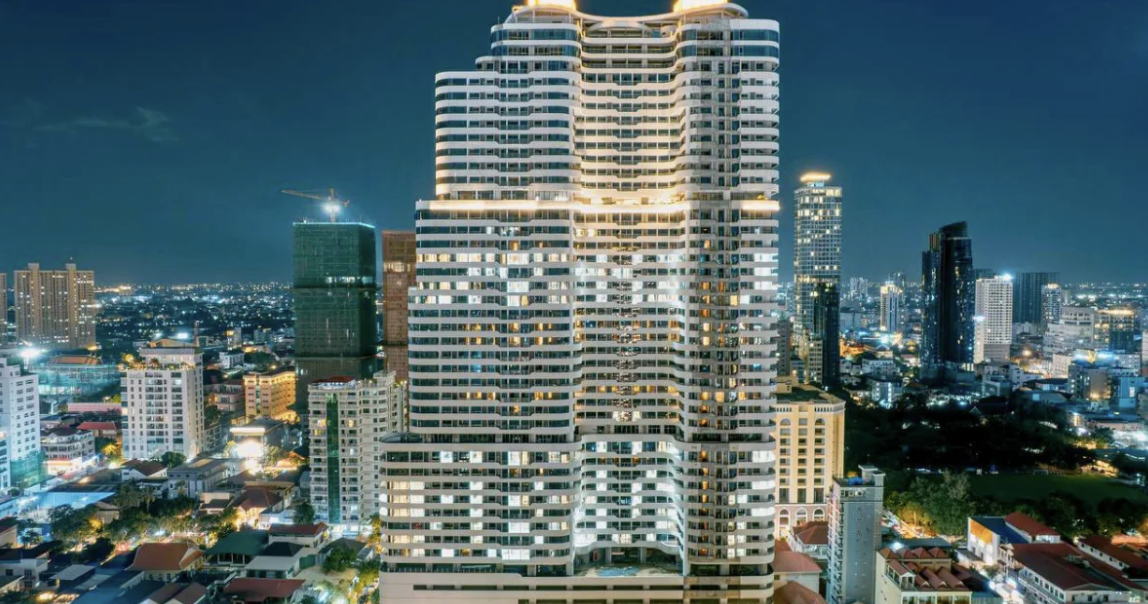
For example, Japanese-developed properties such as the “J-Tower” series utilise Japanese construction technology and tend to be more airtight, making it easier to keep insects out.
Electrical Appliances | Most Japanese appliances cannot be used directly
Japan and Cambodia operate on different voltage standards: Japan uses 100V, whereas Cambodia uses 220V.
Because of this, most Japanese appliances cannot be used directly in Cambodia and require a step-down transformer.
Power outlet shapes are often the same as in Japan (Type A) or European-style (Type C), so some devices—such as laptops with multi-voltage adapters—can be used without a transformer.
However, for high-wattage appliances such as hair dryers and irons, using a proper transformer is strongly recommended for safety.
Security | Petty crimes targeting Japanese residents are relatively common
While serious violent crime has been trending downward in Cambodia, petty theft such as pickpocketing, snatch theft, and bag-lifting remains common.
Recent crime statistics for Cambodia are as follows (excerpted):
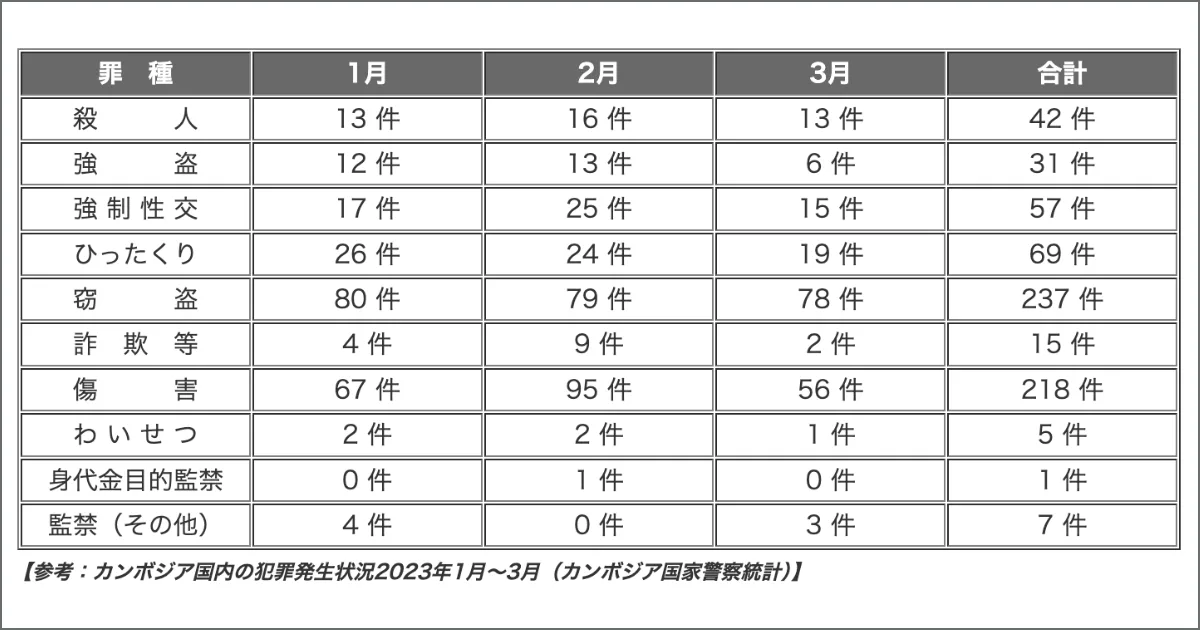
Source: Embassy of Japan in Cambodia, “Overseas Security Information”
Among these, crimes involving Japanese nationals included 5 cases of snatch theft, 2 thefts, and 1 “drug-induced robbery” (so-called knockout robbery).
In a typical knockout robbery, sleeping pills are added to food or drinks, the victim loses consciousness, and valuables are then stolen.
Japanese residents are widely perceived as wealthy in Cambodia and are therefore more likely to be targeted.
Be particularly cautious of people who approach you with unusually friendly or seductive behaviour.
Note that some members of fraud groups have been Japanese nationals themselves, so you should not automatically feel safe just because someone is from the same country.


Using Blogs and Other Grassroots Sources to Learn About Local Conditions
Today, it is easy for individuals to share information via SNS and blogs, and there are many blogs written by people who have relocated overseas.
These often include candid descriptions of local realities and can be very useful sources of on-the-ground information.
One blog we particularly recommend for Cambodia is Shunji Tani’s “Cambodia Real Estate Blog”.
Mr. Tani is the founder and developer of the high-end condominium series “J-Tower,” and is widely regarded as a pioneer in the Cambodian real estate market.
His blog is updated almost daily and covers a wide range of topics, including information on his own developments, neighbourhood walk-throughs, and local food reports.
He also sometimes discusses problematic local businesses quite frankly, which many readers find refreshing.
For more information about blogs related to Cambodian real estate, please see our dedicated article.
Leave Your Move to Cambodia to Anna Advisors
Since our founding, we at Anna Advisors have supported numerous clients with Cambodian real estate transactions and assistance in opening local bank accounts.
We are also very active in helping people who wish to relocate to Cambodia.
With offices in both Phnom Penh and Tokyo, we can provide prompt support both locally and from Japan.
Below is an overview of our services.
Housing | Hearings and consultations with Japan-born staff living locally
For those relocating to Cambodia, we generally recommend Phnom Penh as a base, as it offers the largest number of properties and the widest choice of housing.
We specialise in real estate brokerage around Phnom Penh and have a strong track record in both rentals and sales.
Our representative, Ms. Araki, previously lived in Cambodia during her corporate career, and our Japanese staff at the Phnom Penh office also reside locally.
Because we have Japan-born staff who know local conditions well, we can recommend properties tailored to each client’s specific needs.
Contracts can be concluded either online or in person, depending on the client’s preference.
Banking | Careful, hands-on support including after-care for opening accounts
If you are relocating to Cambodia, we strongly recommend opening a local bank account.
Cambodian banks offer a number of advantages that are not available in Japan, such as:
- Non-residents can open and maintain accounts
- Transactions can be conducted in US dollars
- Average fixed-deposit interest rates are extremely attractive, at around 4–5%, enabling efficient asset growth
We also place great emphasis on after-care following account opening, including providing manuals for using each bank’s app and guidance on measures to reduce the risk of account freezes.
We provide account opening support both at our Tokyo office and online.
We also run frequent inspection tours, during which our staff provide real-time support on site.
For those already living in Cambodia, we can assist directly at our Phnom Penh office.ノンペンオフィスにてご対応いたします。
Business | End-to-end coordination for local expansion and startups
We also support Japanese companies looking to enter the Cambodian market or start new ventures locally.
From office leasing to opening corporate bank accounts, we can provide comprehensive, end-to-end assistance.
We can also help with procuring office equipment and introducing experienced local partners such as lawyers and tax accountants who specialise in Cambodian company formation and taxation.
Having founded her own business in Cambodia, Ms. Araki draws on her personal experience to support clients.
Our goal is to help as many Japanese individuals and companies as possible build wealth through foreign-currency-based assets.
Our company-formation support services are available from around USD 3,000–5,000 (approx. JPY 450,000–750,000)for small-scale businesses.
Business | End-to-end coordination for local expansion and startups
We also support Japanese companies looking to enter the Cambodian market or start new ventures locally.
From office leasing to opening corporate bank accounts, we can provide comprehensive, end-to-end assistance.
We can also help with procuring office equipment and introducing experienced local partners such as lawyers and tax accountants who specialise in Cambodian company formation and taxation.
Having founded her own business in Cambodia, Ms. Araki draws on her personal experience to support clients.
Our goal is to help as many Japanese individuals and companies as possible build wealth through foreign-currency-based assets.
Our company-formation support services are available from around USD 3,000–5,000 (approx. JPY 450,000–750,000)for small-scale businesses.