Phnom Penh's Riverside: Where Heritage Meets the City's Next Chapter
June 2024
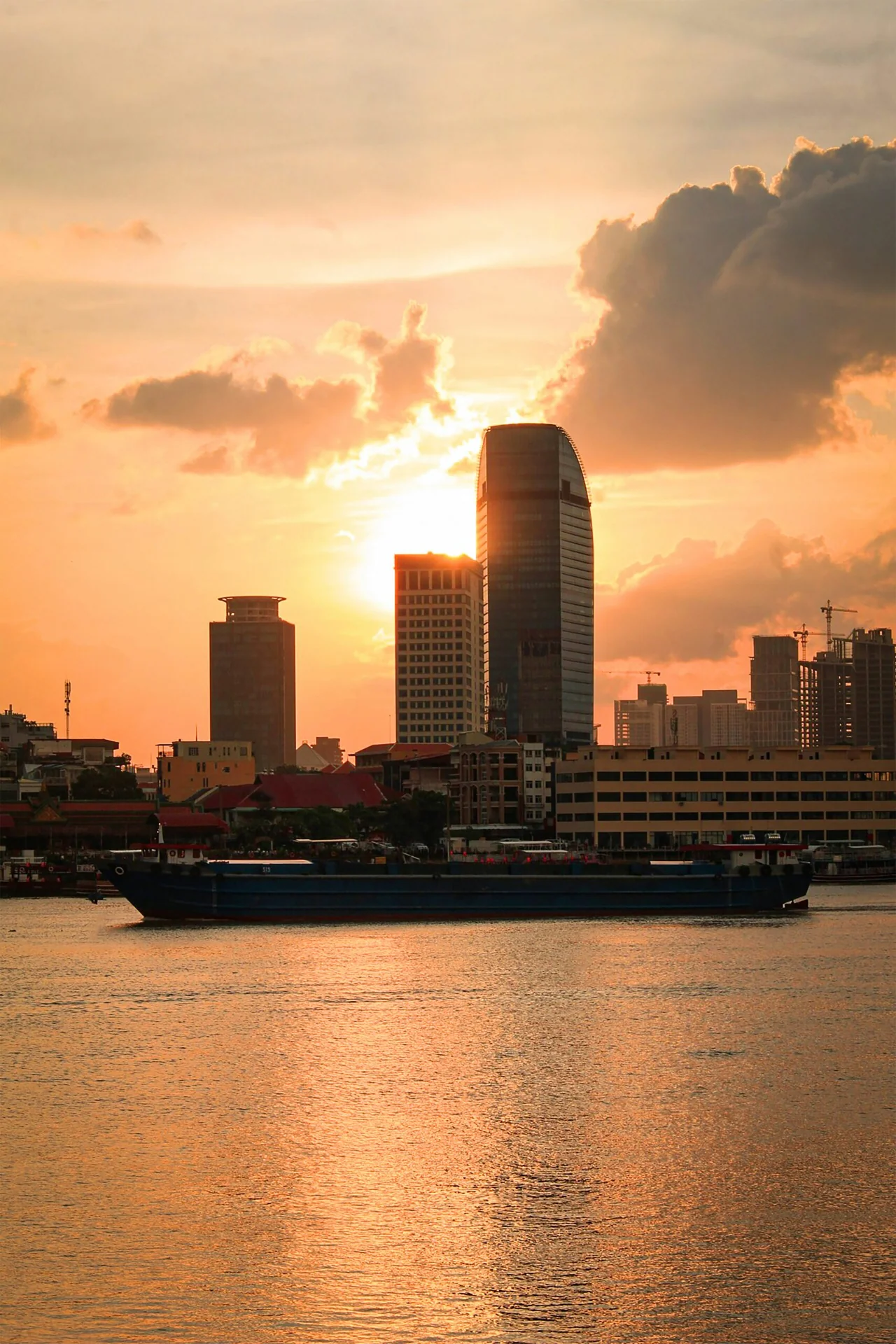
Few urban waterfronts in Southeast Asia carry the historical weight — and the future potential — of Phnom Penh's riverside. The confluence of the Tonle Sap and Mekong rivers has defined this city for centuries, and today it sits at the intersection of preservation and development in a way that is genuinely unique.
Sisowath Quay: The Historic Heart
Sisowath Quay — the riverside boulevard running north from the Royal Palace — is Phnom Penh at its most photogenic. French colonial buildings line the western side; the broad promenade and river stretch to the east. In the early morning, monks walk along the waterfront and locals practice tai chi and badminton. By evening, the strip is alive with restaurants, bars, and the kind of easy social energy that makes cities memorable.
Diamond Island: The Future Arriving Now
South of the city centre, Diamond Island (Koh Pich) represents the other end of the riverside story. This masterplanned development — built on a river island — is clean, modern, and deliberately designed for the next generation of Phnom Penh residents. The promenade here is wide and well-maintained, the residential towers are among the city's newest and best-designed, and amenities including the Canadian International School and a growing retail precinct make it increasingly self-contained.
Investment Implications
Riverside locations command a premium in every city, and Phnom Penh is no exception. Properties within walking distance of Sisowath Quay or on Diamond Island consistently achieve higher rental rates and stronger capital appreciation than comparable units further inland. For investors considering building a Phnom Penh portfolio, riverside and near-riverside assets are worth prioritising — particularly as the city's population and expatriate community continue to grow.